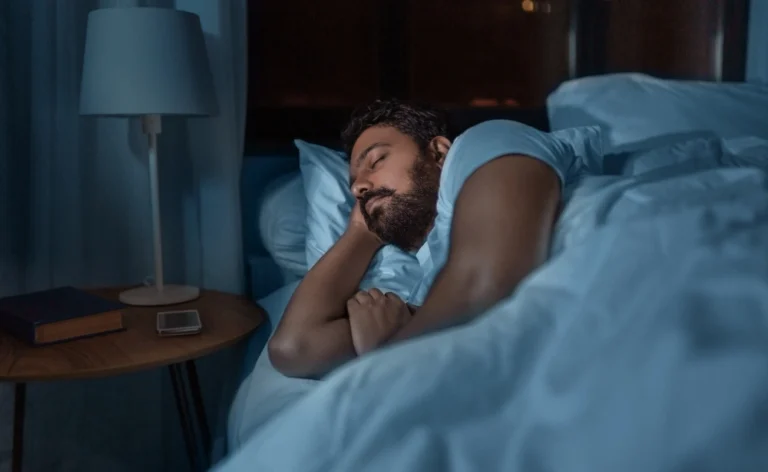
Sleep is the thing most of us sacrifice first when life gets busy. The research suggests it’s one of the most expensive trades you can make.
Key takeaways
- About a third of adults have at least one symptom of insomnia, and nearly a billion adults worldwide have sleep apnoea, most without knowing it.
- One week of five-hour nights cut young men’s daytime testosterone by 10 to 15%, and poor sleep makes weight and mood harder to manage.
- The first recommended treatment for long-term insomnia isn’t a pill, and sleep apnoea needs its own diagnosis, usually with a sleep study.
How commonHow common sleep problems are
About a third of adults have at least one symptom of insomnia: trouble falling asleep, staying asleep, or waking too early. Around 6% have it badly enough to count as a diagnosable sleep disorder.1
Then there’s sleep apnoea, where your airway repeatedly closes during sleep and your breathing stops and starts. A study in The Lancet Respiratory Medicine estimated that nearly a billion adults aged 30 to 69 worldwide have it, and about 425 million have it badly enough to need treatment.2 Most don’t know.
The effectsWhat poor sleep does to your body
If you’re working on your energy, your weight or your testosterone and you’re not sleeping well, you’re pushing uphill.
What worksWhat actually works
How Oryx helpsA plan built around what’s keeping you up
An Oryx doctor will ask what your nights and days actually look like, check for signs of sleep apnoea and look at the things that often sit behind poor sleep, like stress, alcohol, shift work and medicines.
Your plan is built around what’s driving it, with a prescription only where it’s appropriate, and a referral for a sleep study if you need one.
QuestionsFrequently asked questions
How common is insomnia?
About a third of adults have at least one symptom of insomnia, and around 6% have it badly enough to count as a diagnosable sleep disorder.
How do I know if I have sleep apnoea?
The classic signs are loud snoring, gasping at night and heavy tiredness during the day, and a partner often notices first. Diagnosis usually needs a sleep study.
Are sleeping tablets the best treatment for insomnia?
No. The first recommended treatment for long-term insomnia is cognitive behavioural therapy for insomnia, or CBT-I. Sleeping tablets are usually only prescribed for a few days or weeks because of side effects and the risk of dependence.
Does poor sleep affect testosterone?
Yes. When healthy young men slept five hours a night for a week, their daytime testosterone fell by 10 to 15%, about what you’d expect from 10 to 15 years of ageing.
How much does the Oryx sleep programme cost?
Sleep programmes start from R180 a month. Your doctor will give you the full cost before you commit.
Tired of waking up tired? Start with the free two-minute eligibility check.
The free eligibility check takes two minutes, it’s private, and there’s no obligation. If you’re a good fit, you’ll speak to one of our doctors.
References
- Ohayon MM. Epidemiology of insomnia: what we know and what we still need to learn. Sleep Med Rev 2002
- Benjafield AV et al. Estimation of the global prevalence and burden of obstructive sleep apnoea: a literature-based analysis. Lancet Respir Med 2019
- NHS. Sleep apnoea
- Leproult R, Van Cauter E. Effect of 1 week of sleep restriction on testosterone levels in young healthy men. JAMA 2011
- NHS. Insomnia